

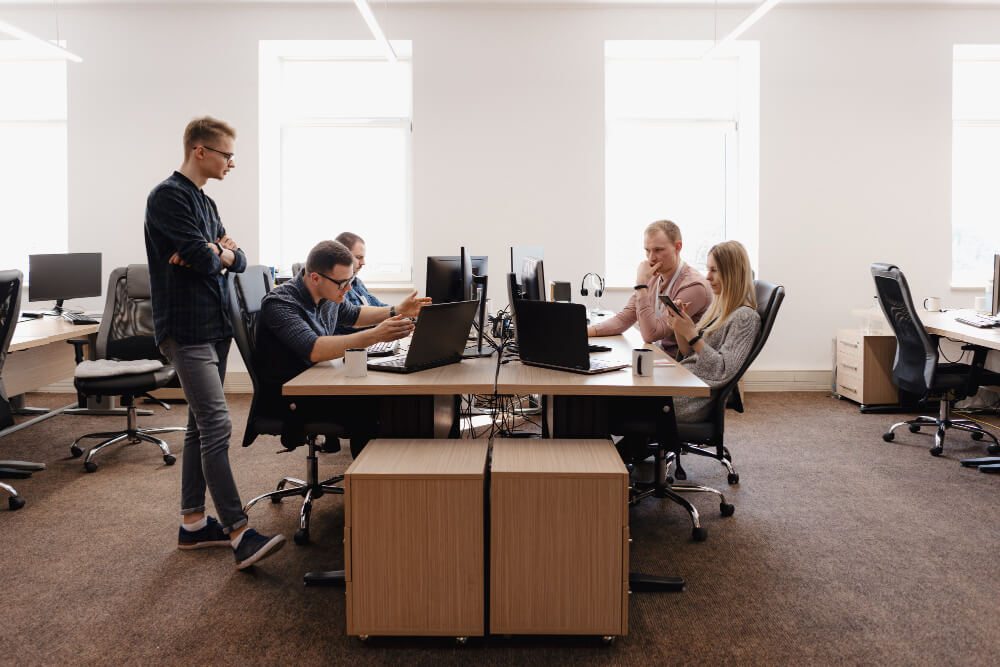
They arrive disguised as small inefficiencies. A desk that never quite fits the task. A setup that forces awkward angles. Too little room for shared work, too much clutter for solo work, and that slow-building sense that the space is somehow making concentration harder than it needs to be. People usually blame the workload first. Fair enough. But the environment often deserves more blame than it gets.
That’s why office workstation options matter more than they might seem at a glance. The choice isn’t only about furniture. It shapes how people move through the day, how easily they settle into tasks, and how much low-grade friction the office keeps adding to work that’s already demanding enough.
Because focus rarely depends on discipline alone. It depends quite a lot on whether the setup is helping or quietly getting in the way.
Good Workspaces Remove More Friction Than People Notice
A workstation does more than hold a screen and a keyboard.
It influences posture, storage, movement, privacy, visibility, and the general sense of whether a person has enough room to think properly. If that setup is underdone, awkward or poorly matched to the actual work being done, attention starts leaking in small but constant ways. Not dramatically. Just enough to make the day feel more effortful.
That’s one reason office layout problems can go unchallenged for so long. The issue doesn’t present as one obvious failure. It shows up as irritation, fidgeting, piles building in the wrong places, people shifting rooms for calls, or teams gradually improvising around furniture that was never doing the job especially well.
Those workarounds become normal very quickly. A chair gets borrowed. A meeting spills into someone else’s area. Personal items start colonising nearby surfaces because the workstation itself isn’t carrying enough of the load. Before long, the setup is shaping behaviour in all the wrong ways.
And because the impact is cumulative, people stop noticing the office itself as the source of the drag.
The Right Setup Depends on the Work, Not the Trend
A lot of office decisions get made through aesthetics first.
Sleek lines, clean finishes, something that looks modern enough to reassure visitors the business has heard of the current decade. Nothing wrong with that, though style is not the same thing as suitability. A workstation has to match the work pattern if it’s going to improve focus rather than simply decorate around bad ergonomics.
Solo heads-down tasks need different support from collaborative work. Phone-heavy roles need different conditions from design-heavy ones. Teams that share material, screens or documents need space arranged differently from people who mostly need concentration and clear digital access. Once that becomes the reference point, workstation choice gets much more practical and much less generic.
That’s useful because a lot of office frustration comes from trying to force very different work styles into the same furniture logic. It looks uniform, sure. It doesn’t always function particularly well.
Good workstation planning tends to respect the rhythm of the job instead of asking people to compensate for the setup all day.
Focus Improves When People Feel Properly Contained
There’s something underrated about feeling settled at a workstation.
Not boxed in, not cut off, just properly contained. Enough surface area. Enough organisation. Enough clarity around where things go and how the day can unfold without constant rearranging. That sense of containment helps concentration because it reduces decision fatigue around the edges of the work.
A poorly planned setup does the opposite. It makes every small task slightly messier than it should be. Documents don’t sit where they need to. Equipment competes for space. Shared zones become clutter magnets. The work itself may still get done, though it costs more attention than it ought to.
That’s where workstation choice starts affecting productivity in a very ordinary but powerful way. Not through motivational slogans or forced office energy, but through reducing the amount of environmental resistance people have to push through before they can focus properly.
And once that resistance drops, the whole office tends to feel calmer. Cleaner. More legible. Less like everyone’s half-managing their surroundings while trying to work.
Better Focus Often Starts With Better Physical Logic
The office setup choice that shapes focus more than people realise is usually the one that gets the physical logic right.
Enough room to work properly. A layout that supports the task. Furniture that doesn’t create awkward compromises by lunchtime. In other words, the sort of practical decisions people rarely describe as exciting, though they end up influencing the day far more than the trendier office details ever do.
That’s why workstation choice matters. It doesn’t only affect how the space looks. It affects how the work feels. Whether concentration comes a bit easier. Whether the office supports momentum or keeps interrupting it in subtle ways.
And in most workplaces, that’s not a minor detail. It’s the difference between a space that merely contains work and one that actually helps it happen.