

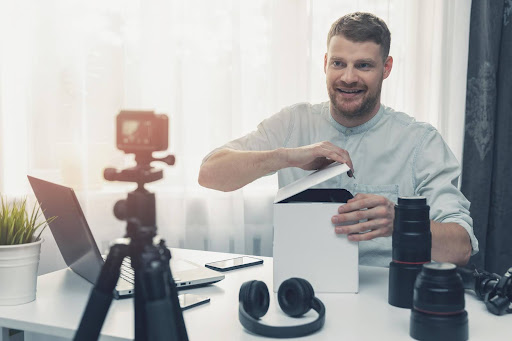
Quality matters in vlogging maybe more than ever before. Viewers today are used to watching crisp, polished, and visually appealing content everywhere they scroll. That doesn’t mean you need Hollywood-level equipment or a massive budget to produce professional-looking vlogs. The truth is that three elements lighting, sound, and camera angles have a bigger impact on your video quality than any expensive device ever could.
If you’ve ever wondered why some vloggers’ videos look polished and cinematic while others feel flat or chaotic, even when using similar gear, the answer nearly always comes down to these hidden fundamentals. Mastering them transforms your vlogs immediately, helping your audience feel more connected, more engaged, and more willing to keep watching.
Let’s break down how lighting, sound, and camera angles each play a critical role and how you can use them together to produce standout vlogs that feel professional, clean, and compelling.
Why Lighting Is Your Most Important Tool
Lighting is the foundation of video quality. A mediocre camera in great light will always outperform a great camera in bad light. When your lighting is right, everything else becomes easier your footage looks sharper, colors look accurate, and your presence on screen looks polished and intentional.
Use natural light strategically
If you’re filming indoors, the easiest way to improve your lighting instantly is to face a window. Natural daylight gives you soft, even illumination that makes your eyes brighter, your skin tone more flattering, and your overall shot more visually appealing.
Avoid filming with a bright window behind you, as this creates harsh backlighting and turns you into a silhouette. Instead, position your camera so the window lights you directly or at a slight angle.
Try three-point lighting for a professional setup
If you use artificial lights, consider a simple three-point setup:
- Key light: your main light source, positioned slightly off-center.
- Fill light: a softer light that reduces shadows created by the key light.
- Back light (or hair light): placed behind you to create depth and separate you from the background.
You don’t need expensive studio lights affordable LED panels or ring lights can create this effect with just a bit of positioning.
Diffuse your lighting for softer, more flattering visuals
Even budget-friendly lights can look professional when diffused. You can soften harsh light using:
- A white shower curtain
- A translucent umbrella
- A photography diffuser
- Thin parchment paper (used safely and carefully)
Soft light reduces shadows, hides imperfections, and creates a warm, cinematic atmosphere.
Be intentional with color temperature
Light color affects mood and realism. Mixing warm (yellow) and cool (blue) lights leads to strange skin tones and distracting visuals. Set your lights to all-warm or all-cool depending on your aesthetic, and keep them consistent across shots.
Sound Quality: The Overlooked Essential
Many beginners obsess over visuals but forget that sound has a bigger influence on viewer retention. Studies show viewers will tolerate less-than-perfect video, but poor audio makes them click away almost instantly.
Improving your audio doesn’t require expensive gear just attention to detail.
Use an external microphone whenever possible
Camera and phone microphones pick up noise from every direction, creating echo or background buzz. A small external mic dramatically improves clarity. Popular types include:
- Lavalier (lapel) mics: ideal for talking directly to the camera.
- Shotgun mics: great when mounted to your camera for directional capture.
- USB condenser mics: best for voiceovers or sit-down videos.
Even a budget-friendly lav mic can outperform built-in audio by a wide margin.
Control your environment
Soundproofing doesn’t require foam panels or a studio. You can reduce echo and background noise by filming in a room with:
- Curtains
- Carpet or rugs
- Couch cushions
- Bookshelves
Soft surfaces absorb sound, creating warm, clean audio.
Avoid recording near:
- Kitchens
- Busy windows
- Air conditioners
- Loud electronics
Turn off devices and close windows whenever possible.
Use proper mic distance
Even the best microphone sounds bad when positioned incorrectly. For optimal audio:
- Place lav mics about 6–8 inches from your mouth.
- Position shotgun mics 6–12 inches above or in front of you, pointed directly at your chest or face.
- Keep consistent mic distance when recording voiceovers.
Better sound means deeper engagement and a more professional presence.
Camera Angles That Elevate Your Vlogs
Camera angles control how viewers perceive you and your environment. Small changes in angle and composition can turn amateur footage into visually compelling storytelling.
Film at eye level for natural connection
Eye-level shots are the gold standard of vlogging. When your eyes line up with the camera, viewers feel like you’re speaking directly to them. Filming too high makes you appear small or unconfident; filming too low can feel intimidating or distorted.
Use a tripod or stack books to position your camera at the right height.
Use the rule of thirds
The rule of thirds is a classic composition technique. Imagine a 3×3 grid across your screen. Positioning yourself along one of the vertical lines rather than directly in the center creates dynamic composition and visual interest.
Off-centered framing also gives space to show background details without overwhelming the shot.
Create visual depth
Professional vlogs don’t place creators directly in front of a wall. Instead:
- Stand a few feet away from your background.
- Add depth with plants, lamps, books, or decor.
- Use lighting to separate yourself from the background.
Depth makes your video feel more cinematic and three-dimensional.
Incorporate movement with purpose
Camera movement should support your story not distract from it. Consider:
- Slow pans for establishing shots
- Handheld walk-and-talks for dynamic vlogs
- Small tilts to reveal scenes or objects
- Static shots for emotional or serious topics
Use movement intentionally to elevate storytelling.
How to Combine Lighting, Sound, and Angles for Maximum Impact
Professional-looking vlogs don’t come from mastering one of these elements they come from balancing them. Think of lighting, sound, and camera angles as the three legs of a tripod. If one is weak, the whole thing becomes shaky.
Here’s how they work together:
- Lighting creates clarity and mood.
- Sound builds trust and intimacy.
- Angles guide emotion and structure.
When all three align, viewers don’t just watch your vlog they experience it.
Using B-Roll to Enhance Professionalism
B-roll adds texture, personality, and visual interest. This includes shots of:
- Your workspace
- The scenery around you
- Hands typing, cooking, or packing
- Close-ups of objects
- Time-lapses or slow-motion clips
You can film your own B-roll or supplement it with carefully chosen stock video footage to fill gaps or illustrate concepts when needed. Just make sure the style matches your vlog so the transition feels seamless.
B-roll isn’t filler it’s storytelling glue. It keeps your audience visually engaged and elevates the pacing of your vlog.
Practice, Experiment, and Refine
Improving your vlog quality is less about gear and more about repetition. With every video you create:
- Experiment with new angles.
- Test different lighting setups.
- Listen critically to your audio.
- Review what worked and what didn’t.
Small improvements accumulate quickly, and before long, your vlogs will feel more cinematic and polished than ever before.
Final Thoughts
Professional-looking vlogs aren’t created by chance they’re created through mindful control of lighting, sound, and camera angles. These hidden fundamentals are what make viewers feel like they’re watching something worth their time.
You don’t need expensive equipment or elaborate sets. You need clarity, intention, and the willingness to refine the basics.
Master lighting to shape mood and visibility.
Master sound to create trust and clarity.
Master camera angles to guide emotion and storytelling.
Put these three forces together, and your vlog becomes more than a video it becomes an experience your viewers will want to return to again and again.